ESG / Report Design
Overseeing copy and design for a publicly traded company's ESG report, protecting quality against a schedule with zero room for delay.


My Role
Scope, budget, and scheduling were mine, though our Design Director shaped certain technical parts of the scope alongside me, and our client-side ESG contact helped coordinate stakeholder time. Everything else, managing scope creep, absorbing change requests, keeping the timeline honest, ran through me. I also built the project's risk plan from the outset, anticipating the legal exposure a report like this carries: review periods that could force a late rewrite, and clearance requirements for any outside assets used in the design.
Day to day, that meant sitting at the center of three groups at once, design, copy, and client, translating a wide range of stakeholder input into a single voice the report could actually speak in.
Approach
The timeline and budget were built around one fixed point: the date Remitly needed the finished report in hand for upload and release. Working backward from that, we scoped each phase with almost no buffer. To keep that structure from breaking under pressure, I ran three standing meetings a week: one with Remitly's Principal Program Manager, Sustainability and Global Impact, to track near-term needs and plan month to month; one with their VP of Global Impact, at her request, since she wanted regular, hands-on visibility; and one internally, with my team and my boss, to check progress against budget.
The Turn
Twice in the project, Remitly asked for a revised report within 24 hours of finalizing feedback, less than half the 48 hours the scope was built on. At roughly 40 pages, a real revision touched the design system as much as the copy, not a handful of edits. My boss's instinct both times was to say yes and keep the client happy, and we did. But I didn't want that to become the pattern. I went directly to the VP of Global Impact and had a direct, respectful conversation about what rushed turnarounds cost in quality, and why that ultimately served no one, including Remitly. She used that conversation to manage expectations on her end, and the requests stopped. If anything, the relationship got stronger for it. Saying no, clearly, showed we'd protect the work rather than just agree to everything.
Outcome
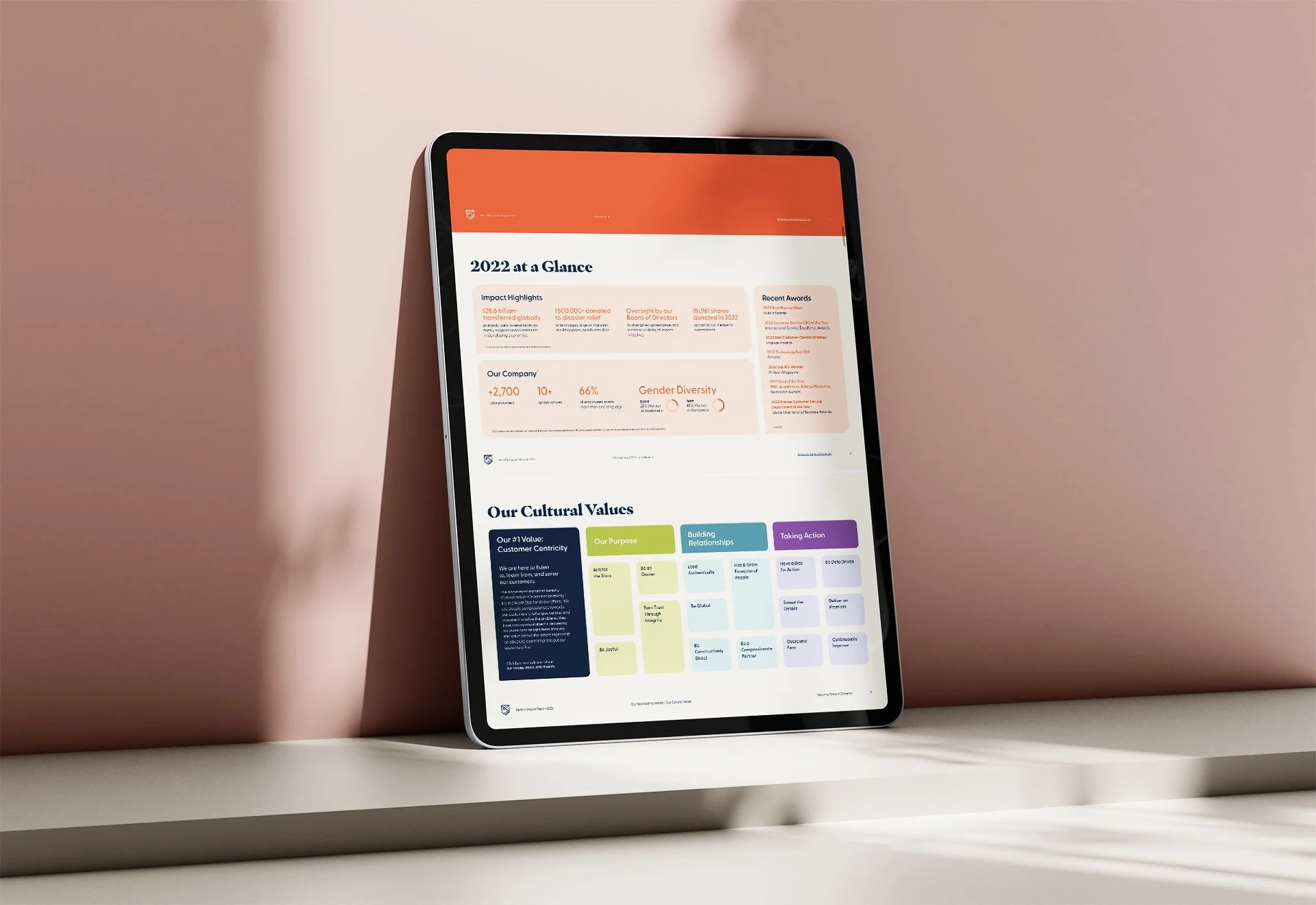
The report went live on schedule. We delivered it to Remitly two weeks ahead of deadline, having consolidated the report from more than 40 pages down to 25, a tighter, sharper document that still carried everything Remitly needed it to say. The feedback was unambiguous: Remitly praised the team's flexibility and said the finished report finally sounded and looked like them. The relationship outlasted the project, too. We were brought back the following year for their next ESG report, with a larger budget behind it.
Reflection
This project sharpened something I now hold as a rule, not an exception: protecting a team's capacity is part of protecting the client relationship, not a trade-off against it. Saying no early built more trust with Remitly than saying yes every time ever could have.